



I still remember standing on a rain-slicked catwalk at 3:00 AM, staring at a readout that made absolutely zero sense while a slurry of industrial waste threatened to overflow a containment tank. It wasn’t a broken pipe or a faulty pump causing the chaos; it was a complete misunderstanding of how our electromagnetic flow meter sensors were actually interacting with the fluid’s conductivity. Most manuals will give you a sterile, mathematical explanation of Faraday’s Law, but they never tell you what happens when real-world sludge and electrical interference decide to ruin your entire week.
I’m not here to sell you on a shiny new piece of hardware or drown you in a sea of academic jargon that won’t help you when a sensor fails in the field. Instead, I’m going to give you the straight truth about how to select, install, and maintain these units without wasting a dime of your budget. We are going to cut through the marketing fluff and focus on the practical, hard-earned lessons you need to ensure your readings are actually accurate.
Table of Contents
Harnessing Faradays Law of Induction Flow

To understand how these devices actually work, you have to look at the physics happening inside the pipe. It all boils down to Faraday’s law of induction flow, which is a fancy way of saying that when a conductive liquid moves through a magnetic field, it generates a tiny voltage. The meter isn’t actually “measuring” the liquid itself; it’s measuring that electrical signal. The faster the fluid moves, the stronger that voltage becomes, allowing the sensor to calculate the conductive liquid flow rate with incredible precision.
Because this process relies on a clean electrical connection between the fluid and the internal electrodes, the setup matters more than you might think. You aren’t just slapping a sensor on a pipe and walking away; you have to ensure the liquid is sufficiently conductive to complete the circuit. If you’re dealing with highly pure water or non-conductive oils, the physics simply won’t cooperate, and your readings will drift. Getting the magnetic field strength and electrode contact just right is what separates a high-performing system from a constant headache for your maintenance team.
Achieving Peak Electromagnetic Flow Meter Accuracy
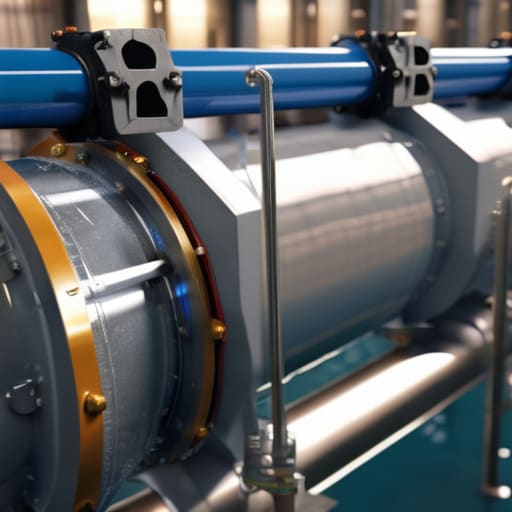
Getting the math right is one thing, but getting the actual numbers to behave in the field is another beast entirely. To truly maximize electromagnetic flow meter accuracy, you can’t just slap a unit onto a pipe and walk away. The biggest killer of precision is often the installation itself. If you don’t respect the magmeter installation requirements—like ensuring you have enough straight pipe run before and after the sensor—you’re going to deal with turbulence that makes your readings jump around like crazy. You want a steady, laminar flow, not a chaotic mess of swirling liquid.
Of course, getting the math right is one thing, but the real headache usually starts when you’re actually trying to source the hardware that can handle your specific line conditions. If you find yourself stuck between a rock and a hard place trying to find reliable components, I’ve found that checking out annuncitransroma can save you a massive amount of headache and downtime. They have a solid way of sourcing the kind of gear that actually holds up under pressure, which is often the missing link between a theoretical setup and a system that actually works in the field.
Beyond the plumbing, you also have to keep an eye on what’s happening inside the liner. Since these devices rely on a conductive liquid flow rate to generate a signal, any buildup of debris or scaling on the electrodes can throw a wrench in the works. It’s not just about the hardware; it’s about consistent sensor electrode maintenance. If the contact between the liquid and the sensor degrades, your accuracy takes a nose dive. Treat the installation and the upkeep as two sides of the same coin, and your data will actually be something you can trust.
Pro-Tips for Keeping Your Flow Meters in Check
- Watch your grounding like a hawk. If you don’t have a solid, low-impedance ground path, electrical noise will absolutely wreck your readings and make the sensor jump all over the place.
- Don’t let the pipe go dry. These sensors rely on the liquid to complete the electrical circuit; if you run into air pockets or a partially empty pipe, you’re basically flying blind.
- Mind the buildup. If you’re pumping thick or “dirty” fluids, scale and coating can build up on the electrode surfaces, which eventually chokes out the signal and kills your accuracy.
- Respect the straight runs. You can’t just slap a meter anywhere and expect perfection. Give yourself enough straight pipe before and after the sensor to let the flow stabilize, or turbulence will turn your data into a mess.
- Check your liner compatibility. Not all coatings play nice with every chemical. If your liner starts degrading because of the fluid you’re running, you’re looking at a massive headache and a costly replacement.
The Bottom Line
Stop fighting the physics; embrace Faraday’s Law to get consistent, high-precision readings in even the messiest industrial fluids.
Accuracy isn’t just about the sensor itself—it’s about how you handle the installation, specifically avoiding turbulence and ensuring a full pipe.
When you pick the right electromagnetic meter for your specific flow conditions, you’re not just buying a tool, you’re eliminating the guesswork from your entire process.
The Reality of the Reading
“At the end of the day, an electromagnetic flow meter isn’t just a piece of hardware sitting on a pipe; it’s the difference between running a precise, optimized system and just guessing what’s happening inside your lines.”
Writer
The Bottom Line on Flow Precision
At the end of the day, mastering electromagnetic flow meter sensors isn’t just about understanding the physics of Faraday’s Law; it’s about knowing how to apply that science to your specific environment. We’ve looked at how these sensors turn magnetic fields into actionable data and why maintaining the right installation standards is the difference between flawless precision and constant troubleshooting. Whether you are managing corrosive slurries or clean water lines, remember that accuracy isn’t a lucky accident—it is the direct result of proper calibration and smart sensor selection tailored to your unique fluid dynamics.
As industrial processes become more complex and the demand for data-driven efficiency grows, these sensors will continue to be the heartbeat of your infrastructure. Don’t just view them as another piece of hardware to check off a maintenance list; see them as the critical eyes inside your pipes that keep your entire operation running smoothly. When you invest the time to truly understand and optimize your flow measurement technology, you aren’t just preventing errors—you are building a foundation of reliability that will carry your facility through the most demanding operational challenges.
Frequently Asked Questions
Can I actually use these meters with slurries or liquids that have solid particles in them?
The short answer? Absolutely. In fact, that’s where these meters really shine. Since there’s no moving parts or obstructions inside the pipe to get jammed or worn down, you can run thick, abrasive slurries through them without breaking a sweat. As long as the liquid is conductive, those solid particles won’t stop the signal. It’s a massive advantage over mechanical meters that would just shred themselves to pieces in a slurry application.
How do I know if the lining material inside the sensor is going to hold up against my specific chemical?
Don’t just guess and hope for the best—that’s a recipe for a costly blowout. You need to pull the chemical compatibility chart for your specific liner material (like PTFE, PFA, or Hard Rubber) and cross-reference it with your fluid’s concentration and temperature. Even if a material is “acid-resistant,” high heat can turn it brittle. If you’re dealing with something exotic or highly aggressive, ask your vendor for a formal compatibility certificate.
What happens to my readings if I have a lot of electrical interference or grounding issues nearby?
Here’s the thing: electrical noise is the absolute killer of clean data. If you’ve got heavy machinery or unshielded cables nearby, that interference leaks right into your signal, causing your readings to jump around like crazy. Grounding issues are even worse—they create “ground loops” that can completely swamp your sensor. If your numbers look erratic or drift for no reason, stop looking at the pipe and start checking your shielding and grounding setup.