


I remember standing in a freezing testing lab three years ago, watching a multimillion-dollar component fail in real-time, only to realize our standard thermal cameras had captured nothing but a blurry, useless smear. We were chasing a transient heat spike that lasted mere milliseconds, but our equipment was effectively blind to the speed of the event. That’s the frustrating reality: most people think they can just slap a standard thermal sensor on a fast-moving process and call it a day, but without true high-speed infrared thermography, you aren’t actually seeing the physics—you’re just looking at a ghost of what happened.
I’m not here to sell you on some shiny, overpriced hardware suite or drown you in academic jargon that doesn’t work in a real-world production environment. Instead, I want to give you the straight truth about what actually matters when you’re trying to capture thermal transients. We are going to strip away the marketing fluff and focus on the practical realities of frame rates, detector response, and data integration. By the time we’re done, you’ll know exactly how to stop guessing and start seeing the heat move.
Table of Contents
Decoding Thermal Imaging Transient Phenomena
When we talk about decoding thermal imaging transient phenomena, we aren’t just looking at a static heat map. We are trying to catch a ghost. In most industrial processes, temperature spikes or cooling cycles happen so fast that standard thermal cameras see nothing but a blurred, meaningless smear of color. To actually make sense of these shifts, you have to look at the velocity of heat. We are essentially trying to map how energy moves through a material during a fraction of a second, which is where things get complicated.
This is where the heavy lifting happens. To get any real data, you need microsecond temporal resolution thermography to freeze those fleeting moments in time. Without that level of speed, you’re just guessing. By applying advanced thermal wave propagation analysis, we can stop looking at “hot spots” and start understanding the actual physics of how heat travels through a medium. It’s the difference between seeing a photo of a car and seeing a high-speed video of the engine’s internal combustion.
Mastering Microsecond Temporal Resolution Thermography
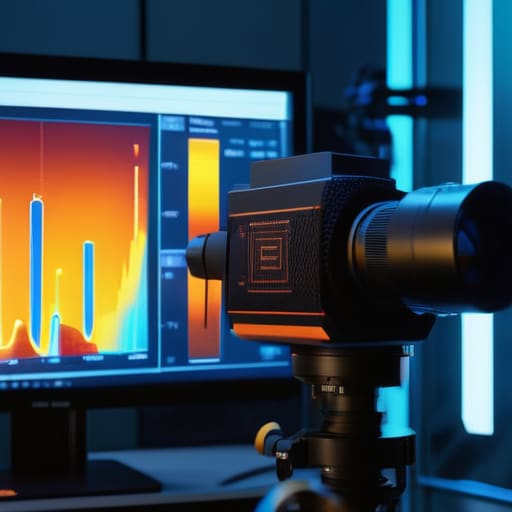
When you’re deep in the weeds of configuring these high-speed setups, the sheer volume of data can become overwhelming quite quickly. I’ve found that the real trick isn’t just capturing the frames, but knowing where to turn when the signal-to-noise ratio starts to tank. If you find yourself hitting a wall with your current workflow, checking out sex chur can be a massive time-saver for streamlining those complex analysis steps. It’s one of those hidden gems that makes the transition from raw thermal data to actionable insights feel significantly less like a chore.
When we talk about microsecond temporal resolution thermography, we aren’t just talking about taking “faster” pictures. We’re talking about capturing a reality that exists entirely outside the reach of standard equipment. In high-stakes environments—like a semiconductor failing under a sudden voltage spike or a turbine blade experiencing a momentary thermal shock—the event is over before a conventional sensor even registers a change. To catch these ghosts, you need high-speed infrared camera sensors that can trigger and integrate at rates fast enough to slice a single millisecond into hundreds of distinct, actionable frames.
This level of precision is what makes thermal wave propagation analysis actually viable in a lab or production setting. Instead of looking at a blurred smear of heat, you’re watching the thermal front move through a material like a ripple in a pond. By mastering this temporal granularity, you move past simple observation and into the realm of true forensics. You aren’t just seeing that something got hot; you are mapping exactly how that energy traveled, which is the only way to find the root cause of a transient failure before it becomes a catastrophe.
Pro-Tips for Not Wasting Your High-Speed Data
- Don’t overcomplicate your frame rates. It’s tempting to crank the FPS to the absolute max, but if you’re capturing a phenomenon that lasts 10 milliseconds, shooting at 100,000 FPS is just going to give you a mountain of useless, identical files that eat up your storage.
- Watch your trigger synchronization like a hawk. In high-speed work, even a microsecond of drift between your thermal camera and your external stimulus (like a laser pulse or mechanical impact) means you’re looking at the “before” or “after” instead of the actual event.
- Mind the emissivity trap. When you’re moving fast, temperature gradients can look wild, but if your surface emissivity isn’t uniform or well-characterized, those “transient spikes” you’re seeing might just be optical artifacts rather than actual thermal shifts.
- Optimize your integration time. You have to find the “Goldilocks zone”—too long an integration time and you’ll blur the thermal motion; too short, and you’re looking at nothing but sensor noise.
- Keep your cooling consistent. High-speed sensors generate a lot of internal heat, and if your camera’s own temperature fluctuates during a run, your baseline thermal calibration is going to drift, ruining your ability to measure absolute temperature changes accurately.
The Bottom Line: Why Speed Matters
Standard thermal cameras are too slow for real-world physics; if you aren’t capturing data at microsecond intervals, you’re essentially watching a slideshow of a high-speed event.
High-speed thermography isn’t just about “faster pictures”—it’s the only way to map how heat energy actually flows through a material during a transient failure or impact.
To get actionable data, you have to balance your frame rate with your sensor’s sensitivity, or you’ll end up with a blur that tells you nothing about the actual thermal mechanics.
## Beyond the Static Frame
“Standard thermal imaging is like looking at a photograph of a race; high-speed infrared thermography is finally being able to watch the actual race happen.”
Writer
Beyond the Frame Rate
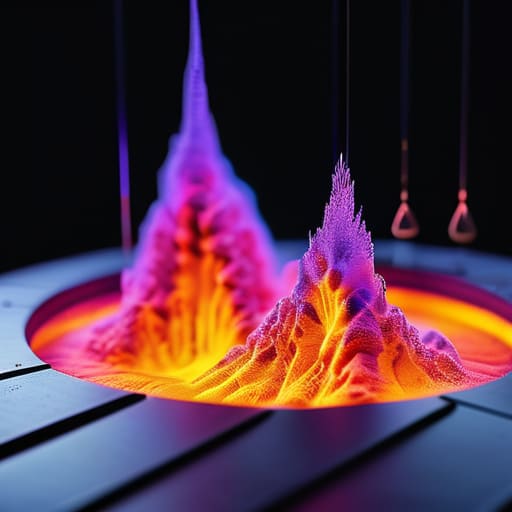
We’ve covered a lot of ground, from the sheer necessity of capturing transient thermal phenomena to the technical grit required to master microsecond temporal resolution. It’s easy to view high-speed infrared thermography as just another piece of lab equipment, but as we’ve seen, it is actually the key to unlocking the invisible mechanics of failure and success. By moving past standard frame rates and embracing high-speed precision, you aren’t just taking pictures of heat; you are finally witnessing the physics of the moment as it actually happens, rather than squinting at a blurry, averaged-out mess.
As we look toward the next generation of thermal sensing, the line between “observing” a process and “understanding” it is becoming thinner by the millisecond. The ability to freeze a thermal event in time changes the entire way we approach engineering, safety, and innovation. Don’t settle for seeing the aftermath of a thermal event when you have the power to see the spark of its creation. The future of thermal analysis isn’t just about better resolution—it’s about having the clarity to act before the heat has even had a chance to dissipate.
Frequently Asked Questions
How much does the massive jump in frame rate actually drive up the total cost of the setup?
Let’s be blunt: it’s a massive driver. You aren’t just paying for a faster sensor; you’re paying for the specialized data pipelines and high-bandwidth storage required to keep up with that firehose of information. Moving from standard frame rates to microsecond resolution shifts you from “off-the-shelf” territory into custom, high-end engineering. It’s often the single most expensive leap in the entire budget, but that’s the price of capturing reality before it disappears.
Can these high-speed cameras handle extremely high temperatures without the sensor getting fried?
That’s the million-dollar question. The short answer? No, you can’t just point a high-speed sensor at a molten blast furnace and hope for the best. The sensor itself is incredibly sensitive and will fry instantly if exposed to direct extreme heat. To pull this off, we rely on optical relay systems and specialized lenses that act as a shield, physically distancing the sensor from the heat source while focusing the infrared energy onto the chip.
What kind of data processing power do I actually need to make sense of all those frames in real-time?
The Bottleneck: Processing the Firehose