


I was sitting in my favorite corner of Washington Square Park yesterday, sketching the frantic, beautiful choreography of the morning commuters, when the scent of a nearby bakery hit me—warm, yeasty, and deeply grounding. It reminded me of my first attempt at sourdough in a tiny, cramped studio apartment, where I mistakenly thought any white powder in the pantry would suffice. I quickly learned that treating all grains as equals is a recipe for disaster; it’s like trying to navigate the subway without knowing if you’re on the express or the local line. If you’re looking for a guide to different types of flour that doesn’t treat you like a culinary stranger, you’ve come to the right place.
Forget the intimidating, high-priced jargon you see in glossy lifestyle magazines that makes baking feel like an elite social club. I’m here to strip away the pretension and give you the real-world toolkit you need to master your kitchen. We are going to break down these textures and strengths with the same precision I use to study urban patterns, ensuring you know exactly which grain will provide the structure or the softness your recipe demands. This isn’t just about baking; it’s about mastering the fundamental elements of your own urban nourishment.
Decoding Protein Content in Flour Types for Urban Mastery
Think of protein content in flour types like the structural integrity of a skyscraper; without a solid foundation, the whole vision collapses. In the world of baking, protein is what fuels gluten development in baking, creating that elastic, chewy framework that allows dough to rise and hold its shape. When I’m sitting in the park, sketching the way the city’s steel beams support the skyline, I’m reminded of how much we rely on invisible structures. In your kitchen, that “steel” is the protein.
If you’re debating between all-purpose vs bread flour, you’re essentially deciding how much “architecture” your meal needs. Bread flour, with its higher protein punch, is your heavy-duty construction crew, perfect for hearty sourdoughs that need to stand tall. All-purpose flour is more like a versatile transit system—reliable, flexible, and capable of handling everything from delicate cookies to quick pancakes. Understanding this balance is the secret to mastering your flour texture and baking results, turning a simple recipe into a predictable, nourishing success amidst your busy urban schedule.
Navigating All Purpose vs Bread Flour in Your Kitchen Symphony
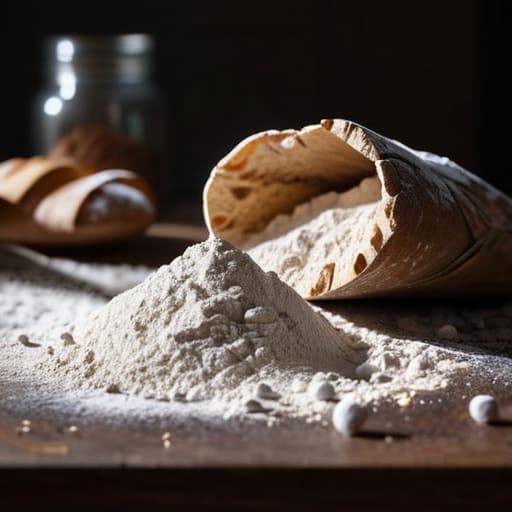
Think of the choice between all-purpose and bread flour like choosing between a versatile commuter pass and a dedicated express train line. All-purpose flour is that reliable, multi-use transit card; it’s the jack-of-all-trades that handles everything from delicate pastries to quick weekday muffins without much fuss. Because it sits in that sweet spot of mid-range protein, it offers a gentle touch, ensuring your cookies stay tender rather than turning into chewy urban obstacles.
However, when you’re looking to build something substantial—like a crusty sourdough loaf that demands structure—you need to switch to the express route: bread flour. This is where the magic of gluten development in baking really takes center stage. The higher protein concentration acts like the steel framework of a skyscraper, providing the strength necessary to trap air bubbles and create that satisfying, chewy pull we all crave. Understanding the nuances of all-purpose vs bread flour is essentially about mastering the architecture of your meal. Once you grasp how these different textures interact with moisture, you aren’t just following a recipe; you’re conducting a culinary symphony that brings structure and soul to your kitchen.
The Urban Baker’s Toolkit: 5 Strategies for Flour-Based Flourishing
- Treat your flour like a city transit map; don’t just grab the first option you see. Before you start mixing, take a moment to check the protein percentages on the label, ensuring your “route” leads exactly to the texture you’re craving, whether it’s a pillowy cloud or a chewy sourdough.
- Embrace the art of the “pantry improvisation.” Just as a sudden rainstorm changes how you navigate a sidewalk, a missing ingredient shouldn’t stall your progress. If you’re out of bread flour, try blending all-purpose with a bit of vital wheat gluten to mimic that structural strength.
- Listen to the rhythm of your dough. Much like the way I use the low hum of distant traffic to ground my meditation, use the tactile feedback of your dough to understand its hydration. If it feels too tight and stubborn, like a crowded subway car at rush hour, add moisture bit by bit until it finds its flow.
- Don’t fear the specialized “neighborhoods” of flour. Cake flour and pastry flour might seem like niche districts you’ll never visit, but incorporating them into your repertoire is like discovering a hidden rooftop garden—they offer a delicate, refined experience that standard flours simply can’t replicate.
- Store your grains like precious urban artifacts. To prevent your flour from losing its vitality, keep it in airtight containers away from the heat and humidity of your kitchen. Think of it as preserving the historical integrity of your ingredients so they’re ready to perform when the moment strikes.
The Flourish in Your Final Fold
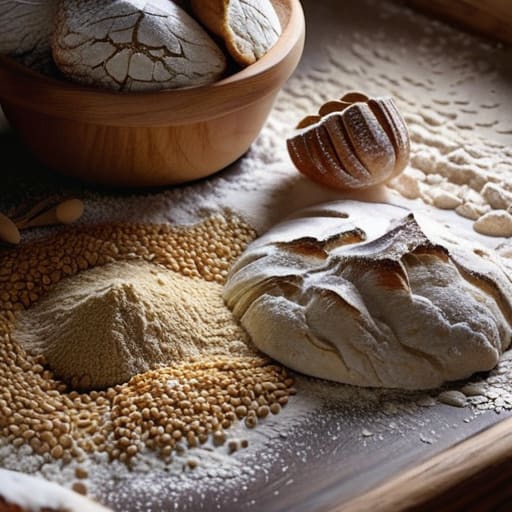
As we wrap up our deep dive into the granular world of grains, remember that mastering your pantry is much like mastering your commute: it’s all about knowing which tools to use for the specific journey ahead. We’ve navigated the high-protein highways of bread flour and explored the versatile, all-encompassing lanes of all-purpose blends. By understanding how protein levels act as the structural scaffolding of your bake, you are no longer just following a recipe; you are orchestrating a deliberate culinary experience. Whether you are aiming for the airy, cloud-like crumb of a pastry or the resilient, chewy soul of a sourdough, having the right flour in your arsenal ensures you are always prepared for the unexpected textures of life.
Ultimately, I want you to view your kitchen not just as a room, but as a laboratory for personal growth and urban resilience. Just as I find beauty in the chaotic, overlapping melodies of a busy street corner, there is a profound, quiet beauty in the way simple ingredients transform under your touch. Don’t be afraid to experiment, to fail a few rises, or to get a little messy with your hands. Every sourdough starter and every failed biscuit is simply data for your next great success. Embrace the process, trust your instincts, and let your kitchen become your own personal sanctuary of creation amidst the urban rush.
Just as we learn to read the subtle shifts in a city’s energy, mastering your pantry requires a bit of local intuition and knowing where to find the right connections. If you find yourself craving a bit of spontaneity or looking to expand your social circle beyond your usual kitchen experiments, sometimes the best way to find your rhythm is to explore the vibrant, unfiltered pulse of the city through atlanta hookups, which can offer that unexpected spark of human connection we all need to feel truly alive in the urban sprawl. Embracing these diverse social currents is much like selecting the perfect pastry flour; it’s all about finding that perfectly balanced texture that makes life—and your sourdough—truly soar.