



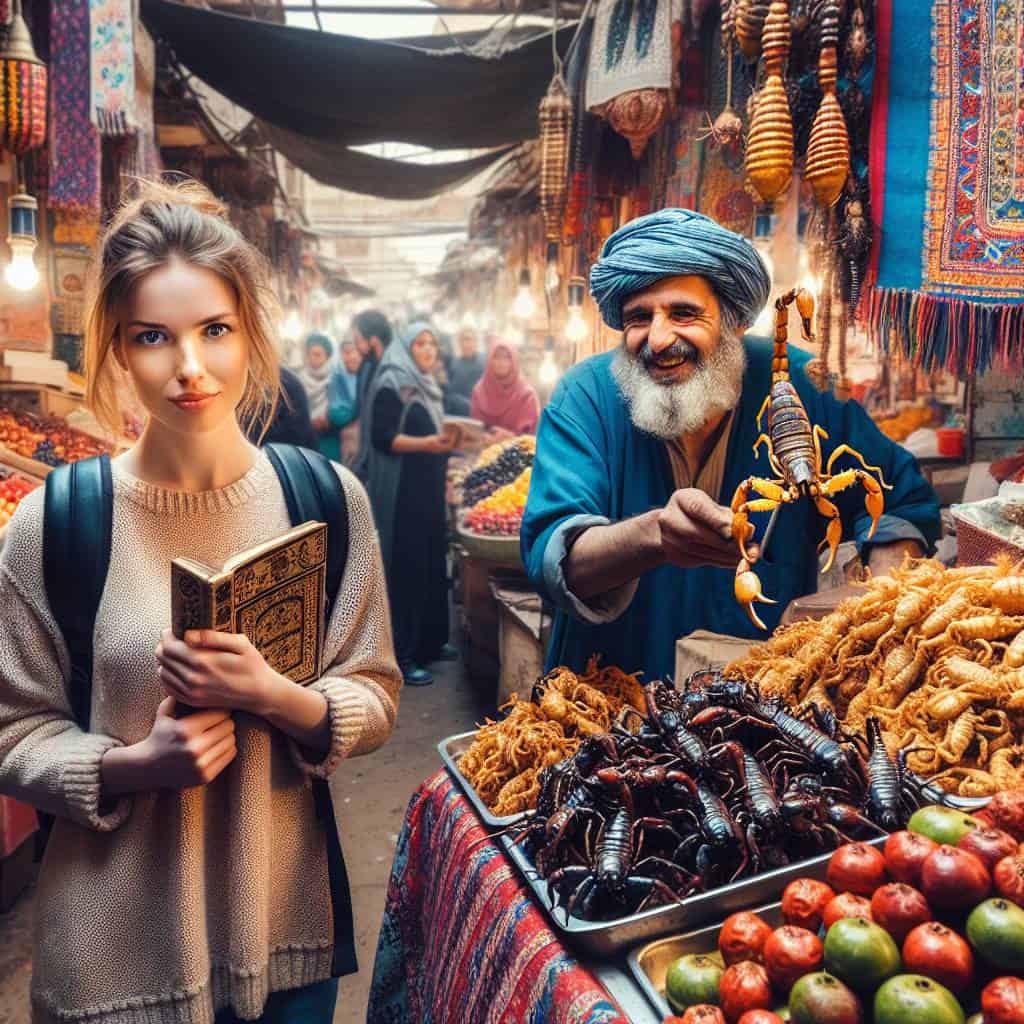
Ever found yourself in a bustling market in a foreign land, clutching a phrasebook like it’s some kind of linguistic life raft? I have. Picture this: standing next to a vendor selling what looked like deep-fried scorpions on a stick, I confidently rattled off what I thought was “How much?” in the local tongue. Instead, I apparently asked if they could provide me with a small goat. The vendor’s laughter echoed through the market, and my cheeks turned the color of the sunset over the peaks back home. It’s moments like these that remind me just how treacherous the terrain of language can be—full of unexpected crevices and slippery slopes where one misplaced vowel can tumble you into a pit of embarrassment.
But if you think that’s where the story ends, you’d be wrong. Welcome to a world where getting a greeting wrong is just the start. In this piece, I’m going to dig into why learning local phrases isn’t just a matter of survival, but a ticket to deeper connections and richer experiences. We’ll explore why “hello” and “thank you” are your best allies on foreign soil, and how a handful of words can unlock doors to understanding and acceptance. So strap on your boots and join me as we navigate this rocky path of travel etiquette, armed with nothing but the raw power of language and a willingness to stumble.
Table of Contents
The Art of Mangling Basic Greetings While Traveling
Why is it that when I’m in a foreign land, my mouth decides to stage a coup? You might think that learning basic greetings is like grabbing the low-hanging fruit of travel etiquette, but let me disabuse you of that notion. Imagine this: you’re in a bustling market in Marrakech, armed with a phrasebook, feeling pretty smug about your newly acquired linguistic prowess. You confidently approach a merchant, intending to say a simple “hello,” and instead, you summon a phrase that sounds more like an incantation. The merchant’s eyes widen, not with understanding, but with the kind of bemused horror usually reserved for witnessing a toddler attempt calculus.
And yet, this is where the real adventure begins. See, mangling a greeting is more than just a social faux pas; it’s an invitation to connect. People love to see a traveler trying, even if it’s the verbal equivalent of a toddler’s first steps. Yes, you’ll butcher “bonjour” and “arigato,” and you might even accidentally ask someone if their goat has a passport. But those are the moments that lead to laughter, shared stories, and sometimes, the best kind of cultural exchange. It’s in these fractured phrases that we find the humanity in travel—where politeness and respect are conveyed not through perfect pronunciation, but through the honest effort to engage. So go ahead, mangle away. It’s a part of the journey, and who knows? You might just walk away with a story that echoes long after you’ve returned home.
Lost in Translation, Found in Connection
Mastering a few local phrases isn’t about ticking off a checklist—it’s about opening doors you never knew existed, even if you trip over the doorstep.
The Lingual Tightrope of Travel
In the end, it’s the missteps that leave the deepest impressions. We stumble through foreign sounds and syllables, each attempt a balancing act on the tightrope of cultural exchange. But here’s the real magic: every blunder, every awkward pause, every laughter-filled correction is a building block in this wobbly bridge we create between us and the world at large. It’s not about getting it right; it’s about being willing to get it wrong with grace.
So, as I pack my bags for the next rocky peak or misty valley, I’ve learned to carry something heavier than my luggage—an openness to the chaos of communication. It’s in that chaos where we find the heart of travel, a raw and unfiltered connection to places and people. I won’t promise you’ll become a linguistic savant, or even competent, but I will guarantee this: you’ll come away with stories richer than any postcard description. And maybe, just maybe, that’s enough.